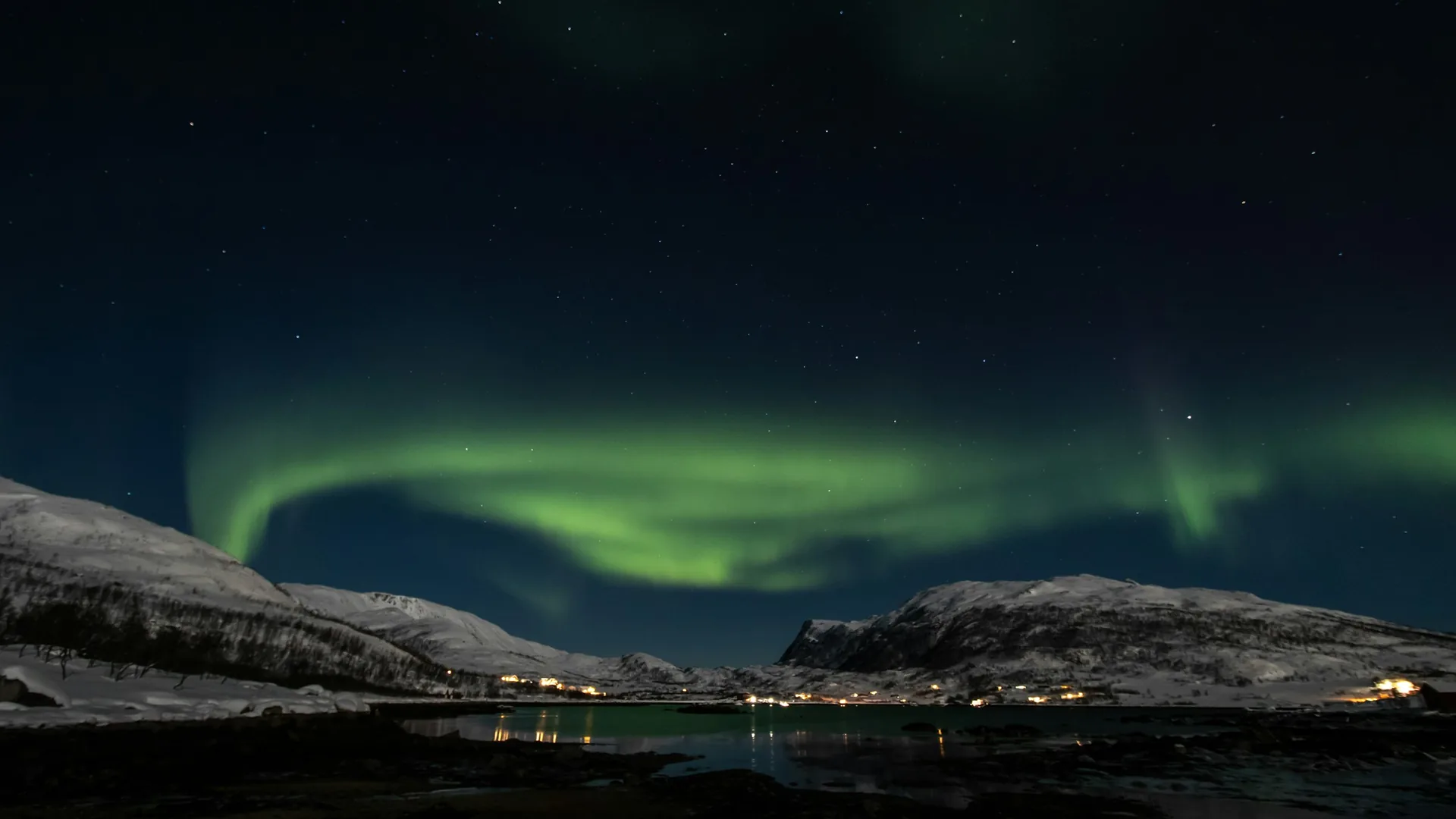
Why chase from Tromsø
Why chase from Tromsø
Under the auroral oval
Tromsø sits at 69° North, well inside the Arctic Circle and directly beneath the auroral oval — the ring around the magnetic pole where the Northern Lights appear most often. That geography is why the city has become the aurora capital of Norway: on a clear, dark night in season, the odds here are about as good as they get anywhere on earth.
A chase beats a fixed spot
The aurora needs clear sky, and Arctic weather is fickle — one valley can be socked in with cloud while another an hour away is crystal clear. A chasing minibus tour exists precisely to solve that: the guide watches the forecast and the cloud radar all evening and simply drives to the clear patch, sometimes crossing into Finland or Sweden to find it. A fixed camp can't do that.
Warm, guided, and photographed
A good tour turns a cold night into an easy one: thermal suits and boots to borrow, a campfire with hot drinks, a guide who knows the science and the best foreground spots — and who takes long-exposure photos of you under the lights, included free, because phone cameras struggle in the dark.
How a hunt night unfolds
How a hunt night unfolds
A Northern Lights chase is a patient evening of driving, watching and waiting. No two nights are the same, but most follow this rhythm.
- Early evening
Pickup and the plan
You're collected in central Tromsø, usually between 6 and 7 pm. The guide has already studied the cloud forecast and the aurora activity, and briefs the group on where tonight's clear sky looks most likely — near Tromsø, or a longer drive inland.
- The drive
Chasing the clear sky
The minibus heads for the break in the cloud. This can be twenty minutes or a couple of hours, and occasionally means crossing the border into Finland or Sweden — bring your passport. The driving is the whole point: you go to the aurora rather than hoping it comes to you.
- First stop
Suits on, eyes up
At a dark, clear spot the guide hands out thermal suits and hot drinks and sets up. Then you watch. The lights often begin as a faint grey-green arc the camera sees before your eye does, then brighten and start to move.
- The show
When it dances
On a strong night the aurora fills the sky in shifting curtains of green — sometimes pink, violet or red at the edges — rippling and folding overhead. The guide takes long-exposure portraits of you beneath it while you simply look up.
- Late
Campfire and the ride back
Many tours gather round a campfire for a warm-up and a snack before the drive home, reaching Tromsø in the small hours. You'll usually get your photos sent through afterwards.
The season & the science
The season & the science
Seeing the aurora comes down to darkness, clear sky and a little solar luck. Here's what actually matters — and what doesn't.
The season: late Sept to early April
The Northern Lights are present all year, but you can only see them against a dark sky. Tromsø has a bright midnight sun in summer and its dark 'aurora season' runs roughly from late September to early April, with the long polar nights of midwinter and the clear spells around the equinoxes among the best.
Clear sky beats everything
The single biggest factor is cloud. A quiet aurora in a clear sky is visible; a strong aurora behind cloud is not. That's the whole case for a chasing tour — the guide's job is to put you under clear sky, wherever that is tonight.
The KP index, in plain terms
The KP index (0–9) is a rough gauge of geomagnetic activity. At Tromsø's latitude you don't need a high number — even KP 2–3 can give a fine display overhead, because the city sits right under the oval. Don't cancel a clear night just because the KP is low.
No guarantees — we won't pretend otherwise
No tour can promise the aurora; it's a natural phenomenon. What a good operator maximises is your odds — dark-season timing, mobility to find clear sky, and long hours out. Many run a policy where you can re-join another night if the lights don't show; check the listing's terms.
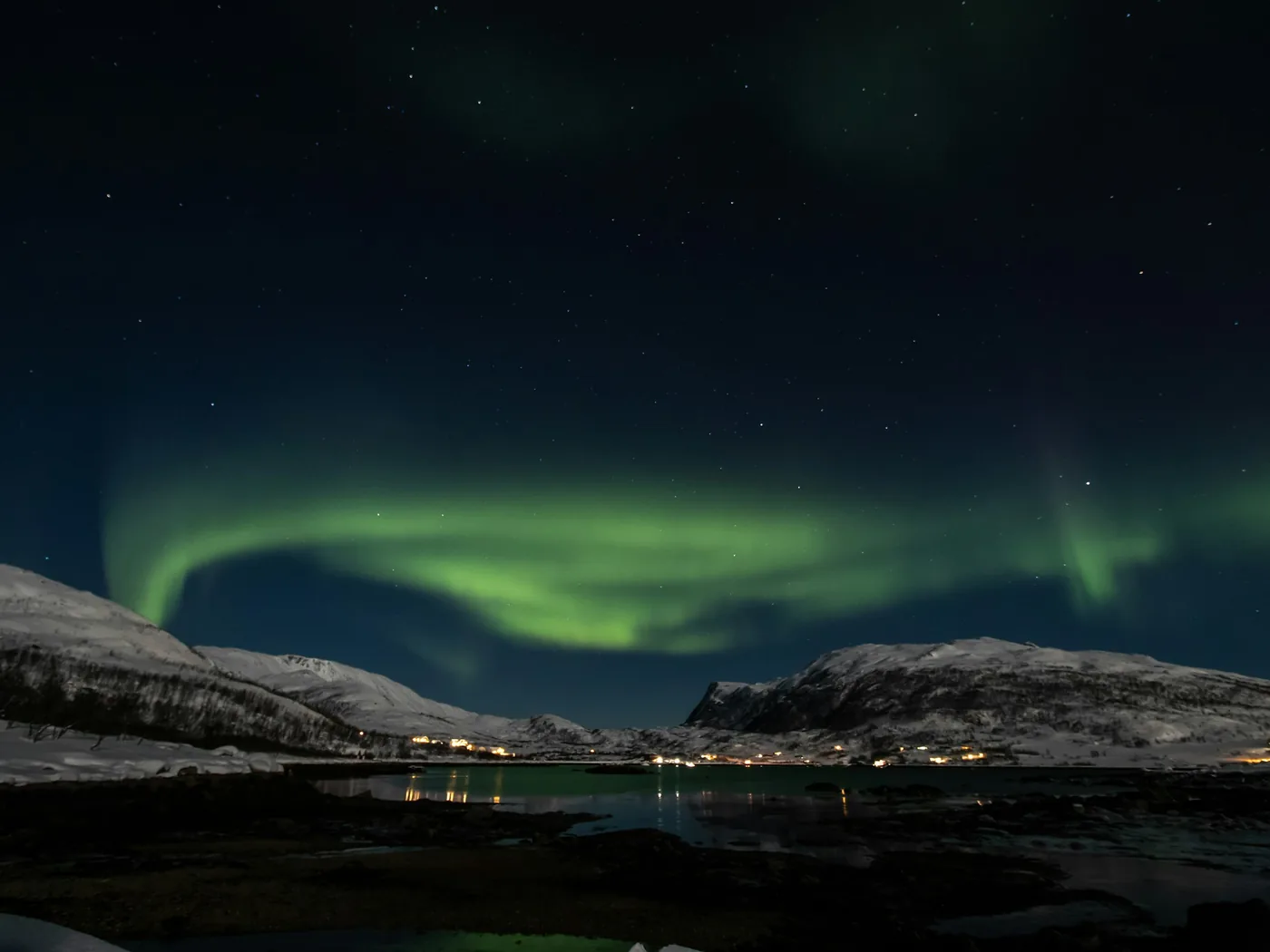
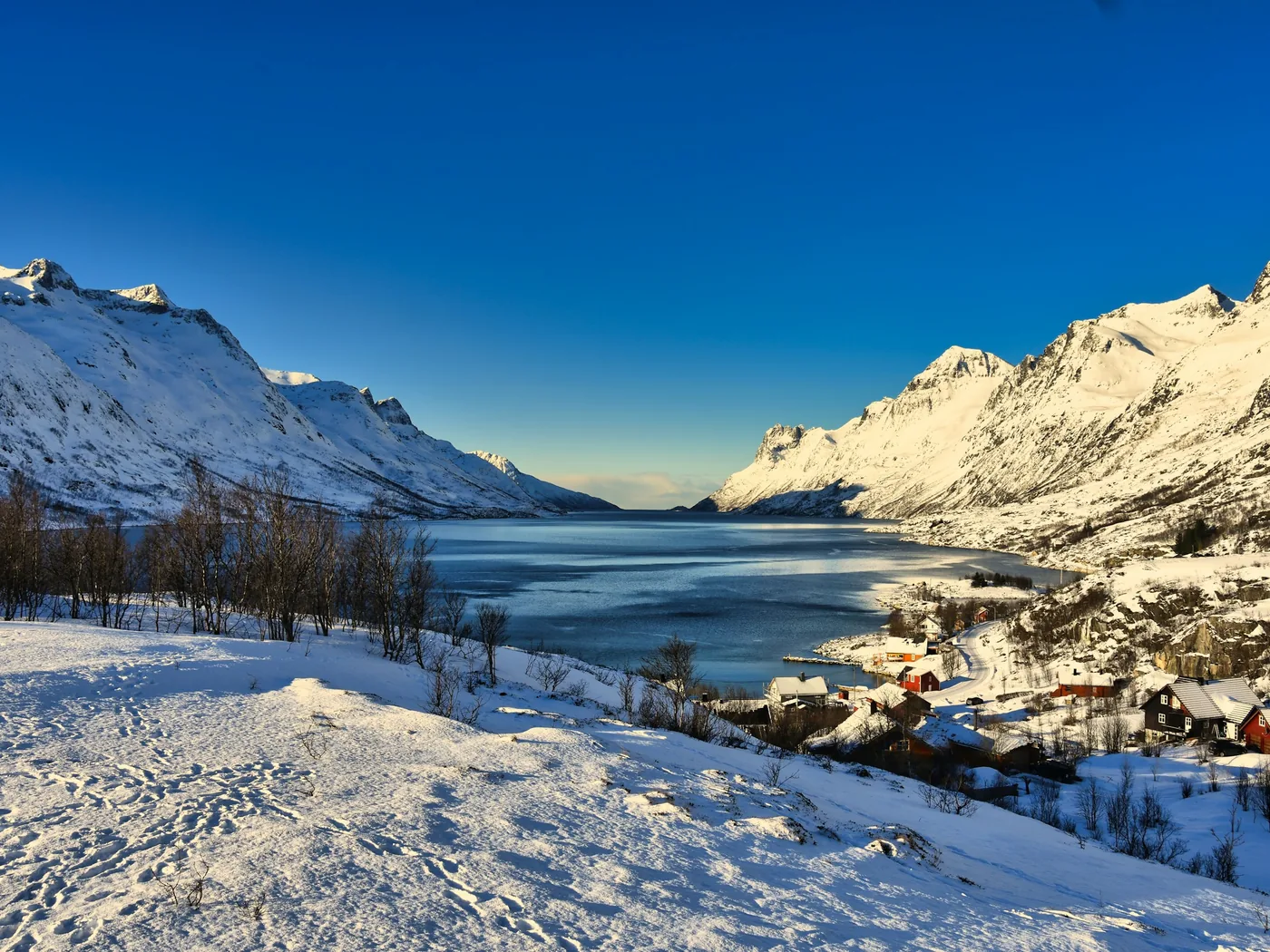
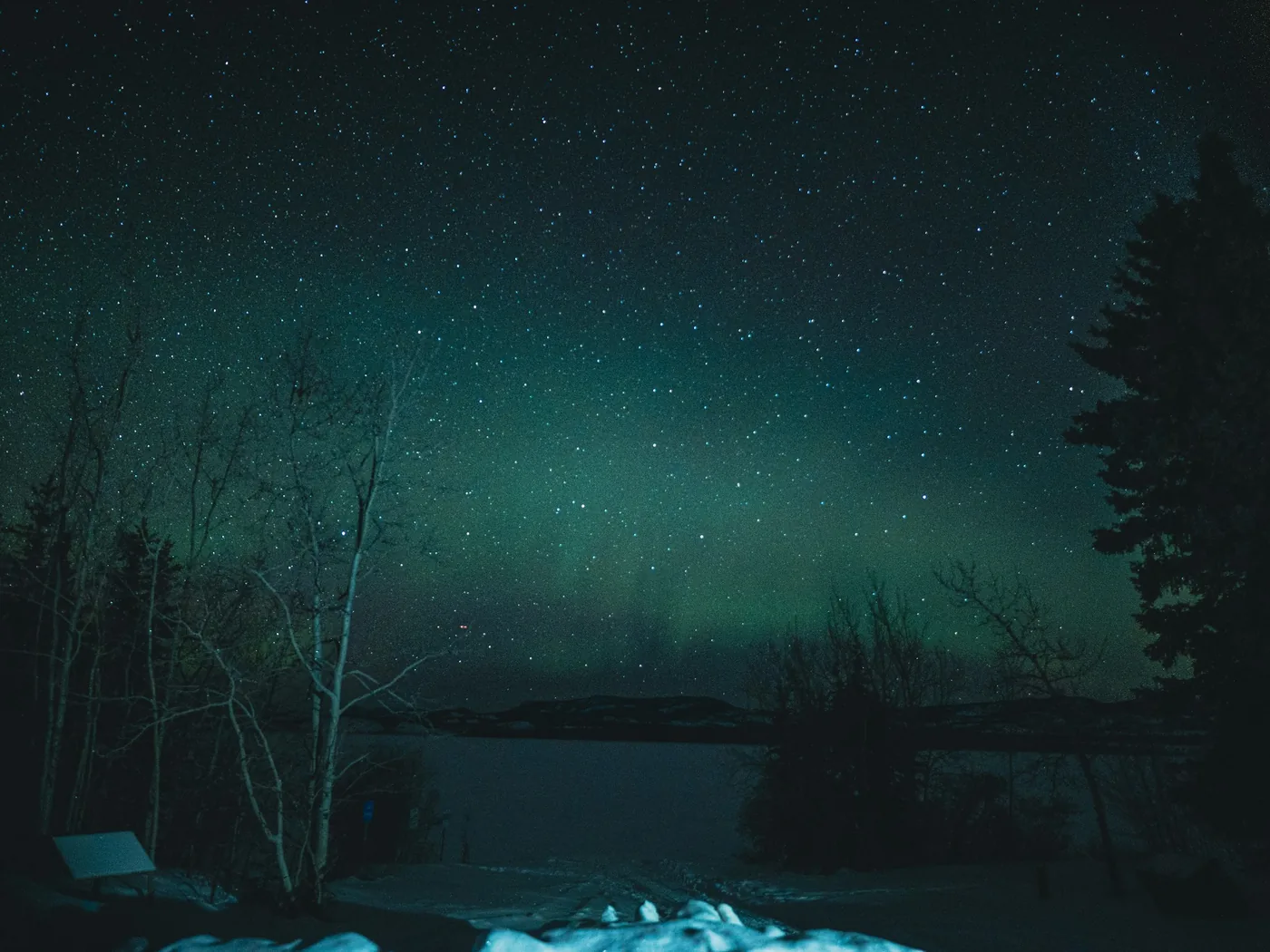
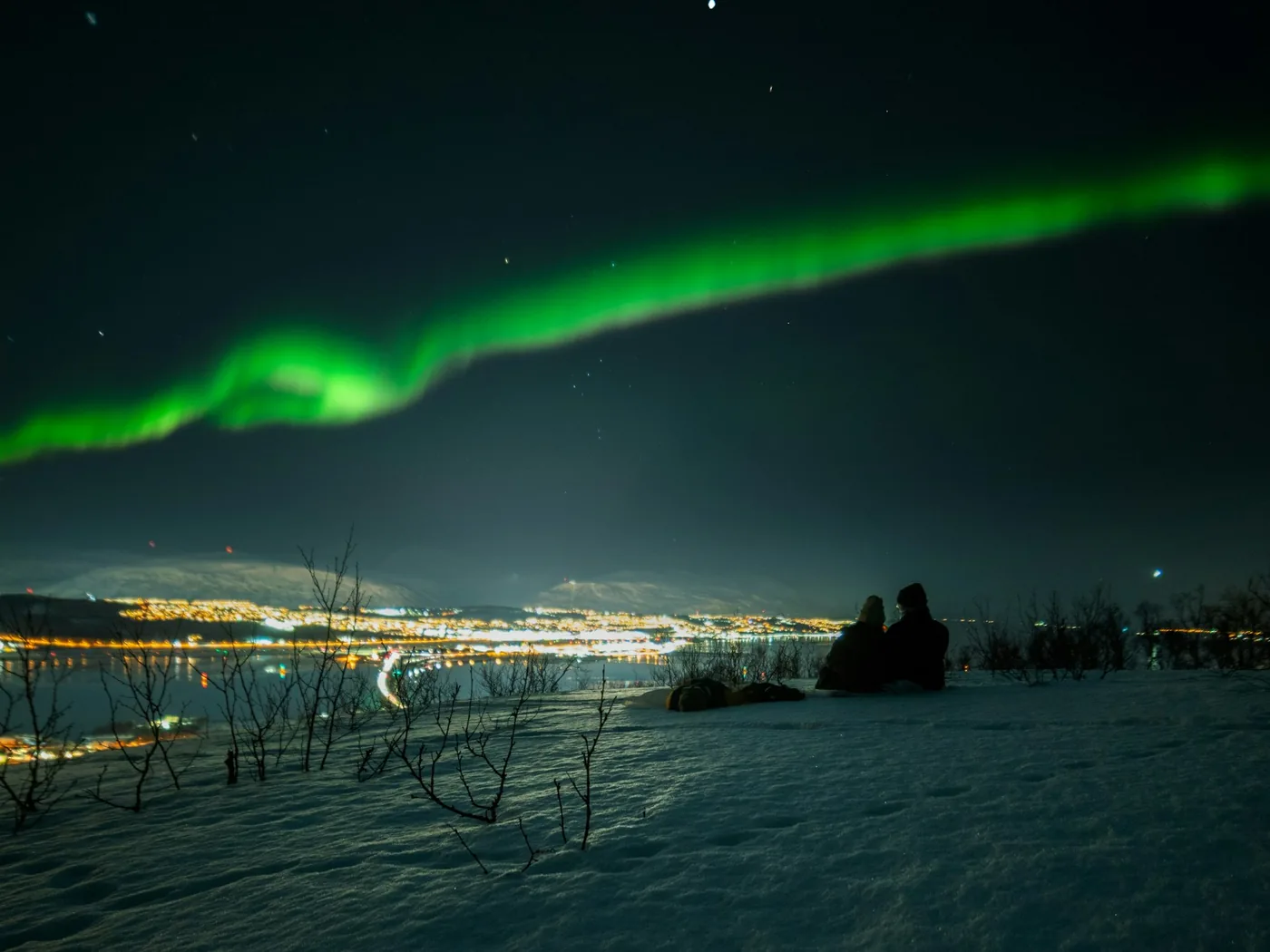
The aurora over Tromsø, in pictures
The aurora over Tromsø, in pictures
Green curtains, Arctic nights and the snowbound landscapes a chase drives out into.
Tour options & what's included
Tour options & what's included
| Option | What it includes | Good to know |
|---|---|---|
| Minibus chase (classic) | Small-group drive to clear sky, thermal suits, hot drinks, guide photos | The best all-round choice — mobility is what finds the lights |
| Chase with campfire / snacks | The same, plus a campfire warm-up and food out in the field | A cosier, longer night; good in the deep-winter cold |
| Small-group / premium | Fewer guests per guide, more attention and photo time | Worth it for photographers and a less crowded viewpoint |
| Photo package included | Long-exposure portraits of you under the aurora, sent afterwards | Standard on many chases — phone cameras can't capture the aurora well |
Ways to book a Northern Lights chase
Find a Northern Lights chase for your dates
Pick a chase below — GetYourGuide handles the booking, shows tonight's open seats, and converts the price to whatever currency your card uses.
Planning your aurora night
Planning your aurora night
Give yourself several nights
The aurora is weather-dependent, so the single best thing you can do is stay in Tromsø for at least three or four nights and book a tour on the clearest ones. One night is a gamble; several nights turn the odds firmly in your favour. Aurora season runs roughly late September to early April.
Dress for a night standing still
You'll be outside, often well below freezing, not moving much. Most chases lend thermal suits and boots, but underneath wear thermal base layers, a warm mid-layer, a hat, gloves and thick socks. Being cold is the main thing that ruins an otherwise good night out.
Pick a chase, not a fixed camp
For your best odds choose a mobile 'chasing' minibus over a fixed viewpoint or camp, especially if the forecast is patchy. The whole value is the guide's ability to drive to clear sky. Bring your passport in case the hunt crosses into Finland or Sweden.
Let the guide handle the camera
The aurora is faint to the eye and hard for phones; long exposures on a proper camera capture it far better. Tours that include free photos solve this — you get keepsake shots and can just watch. If you bring your own camera, a tripod and a wide, fast lens help.
Booking flexibility
A booking doesn't lock you in — cancellation stays free any time up to 24 hours out, and many Tromsø nights skip the upfront charge entirely, so the aurora forecast can be watched before money changes hands. In the holiday peaks the small-group tours sell out, so book the clear-looking nights early.
Planning a Tromsø aurora trip
Planning a Tromsø aurora trip
When to go and how to see the aurora in Tromsø
How the aurora season works month by month, why a chasing minibus beats a fixed camp on cloudy nights, what the KP index really means at 69° North, and how to give yourself the best odds.
Read more →The Science Behind the Northern Lights, Explained
Read more →Why Tromsø Is Built for Aurora-Hunting
Read more →How Forecasters Predict a Good Aurora Night
Read more →What Actually Happens on a Northern Lights Chase
Read more →Tromsø Beyond the Northern Lights
Read more →FAQ
Northern Lights in Tromsø — your questions
What is a Northern Lights chase from Tromsø?
It's a guided evening tour, usually by minibus, that drives out from Tromsø to wherever the night sky is clearest to look for the aurora borealis. Tours typically run 6–8 hours, lend thermal suits and boots, provide hot drinks and often a campfire, and include long-exposure photos of you under the lights. Because Tromsø sits directly beneath the auroral oval at 69° North, it's one of the best-placed cities on earth for seeing them.
Am I guaranteed to see the Northern Lights?
No — the aurora is a natural phenomenon and no tour worth booking will guarantee it. What a good chasing tour does is maximise your odds by going out in the dark season, staying out for hours, and driving to clear sky. Many operators offer a policy to re-join another night if nothing shows; check the specific listing's terms before booking.
When is the best time to go?
The aurora season in Tromsø runs from roughly late September to early April, when the nights are dark enough. The polar nights of midwinter and the clearer spells around the September and March equinoxes are all excellent. Summer's midnight sun makes the lights invisible even when they're active.
Why a chasing minibus rather than a fixed camp?
Because the aurora needs clear sky, and Arctic weather is very local — one area can be cloudy while another an hour away is clear. A chasing minibus can drive to the clear patch, sometimes even crossing into Finland or Sweden, which a fixed camp or viewpoint simply can't. On a patchy-forecast night, mobility is the single biggest advantage.
Do I need a high KP index?
Not at Tromsø's latitude. The KP index gauges geomagnetic activity from 0 to 9, but because Tromsø sits right under the auroral oval, even a modest KP of 2–3 can produce a strong display overhead. Clear, dark sky matters far more than a high KP number here.
What should I wear and bring?
Dress for standing still in deep cold: thermal base layers, a warm mid-layer, hat, gloves and thick socks, even though most tours lend an outer thermal suit and boots. Bring your passport in case the tour crosses a border, and a camera with a tripod if you want your own shots — though tours with free photos take care of that.
Can I book with free cancellation?
Yes — cancel up to 24 hours before departure and you're refunded in full, and most nights also let you reserve a seat without paying until later. That gives you room to watch how the sky's looking and commit closer to the date rather than locking in weeks ahead. Check the exact terms shown before you confirm.